


.svg)
.svg)
Cryptocurrency platforms have made it progressively easier to purchase digital assets. A user can open an account, connect a payment method, and complete a transaction without leaving the application.
But enabling a one-time investment does not secure a customer relationship. Cryptocurrency providers are increasingly evolving to full stack financial services destinations. With most early crypto investors spreading their money around across numerous exchanges and wallets, the goal post has moved from counting transaction volume to winning account primacy, which requires repeated, consistent funding.
That creates a broader product challenge for exchanges, Bitcoin or ethereum based platforms, wallets, brokerages, and fintechs offering digital assets: How do you build a trusted, persistent path from a customer’s salaried income to their crypto account?
A crypto onramp API solves part of that problem. Payroll connectivity can solve the rest.
What is a crypto onramp API?
A crypto onramp API lets a platform embed the process of moving money from fiat currency, such as US dollars, into cryptocurrency or another digital asset.
Depending on the provider and integration, an onramp can manage several parts of the transaction:
- Collecting a payment through a card, bank account, or digital wallet
- Completing required identity, sanctions, or compliance checks
- Presenting exchange rates, fees, and supported assets
- Converting fiat into the selected asset
- Delivering the purchased asset to a custodial or external wallet
For example, leading onramp providers describe their products as infrastructure for converting fiat into crypto and sending the resulting assets to a wallet. Some also act as the merchant of record and manage KYC, fraud, and sanctions-screening responsibilities for the transaction.
This infrastructure is essential. But it is primarily designed around the point of transaction.
It does not necessarily solve how the user funds the account on an ongoing basis, how the platform confirms that funding belongs to the intended customer, or how a newly opened account becomes part of the user’s central financial life.
A transaction onramp is only one part of account activation
Traditional onramp methods are effective for making an immediate cryptocurrency trade. The customer initiates a trade, selects a funding method, and chooses how much crypto to buy.
But each additional trade generally requires another customer decision and another movement of money. The transaction remains dependent on a bank account, card, or balance held somewhere else and the trade is typically delayed while funds clear.
For crypto companies expanding beyond occasional trading, the more important metrics are often further down the funnel:
- How many newly opened accounts receive funding?
- How quickly does the first trade occur?
- How often are customers trading?
- How many customers establish recurring funding inflows?
- What is the average crypto balance in active customers’ accounts?
A one-time onramp can generate a trade. A recurring funding rail can help create a habit.
That is where direct deposit becomes relevant.
Turning direct deposit into a recurring crypto funding rail
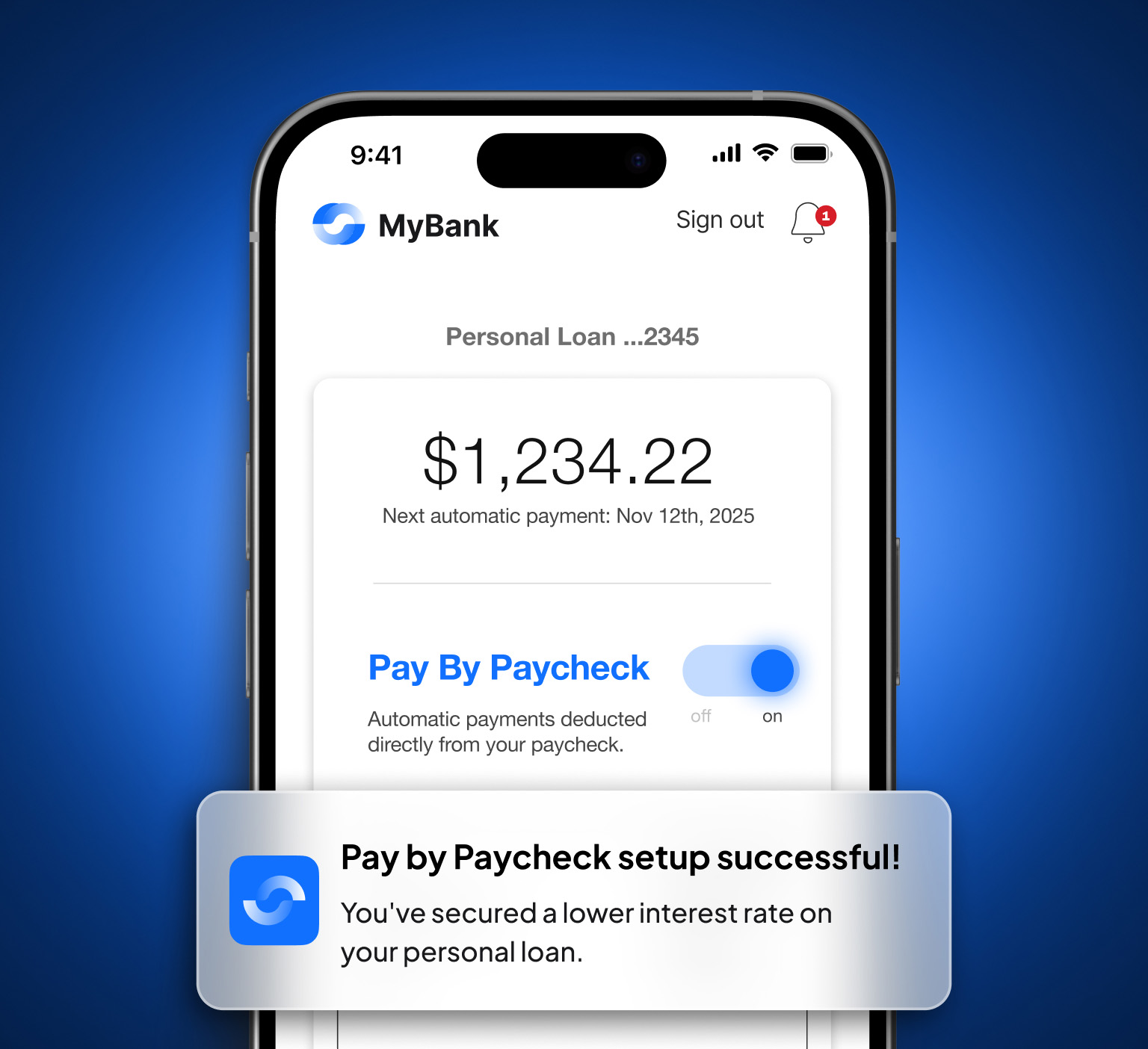
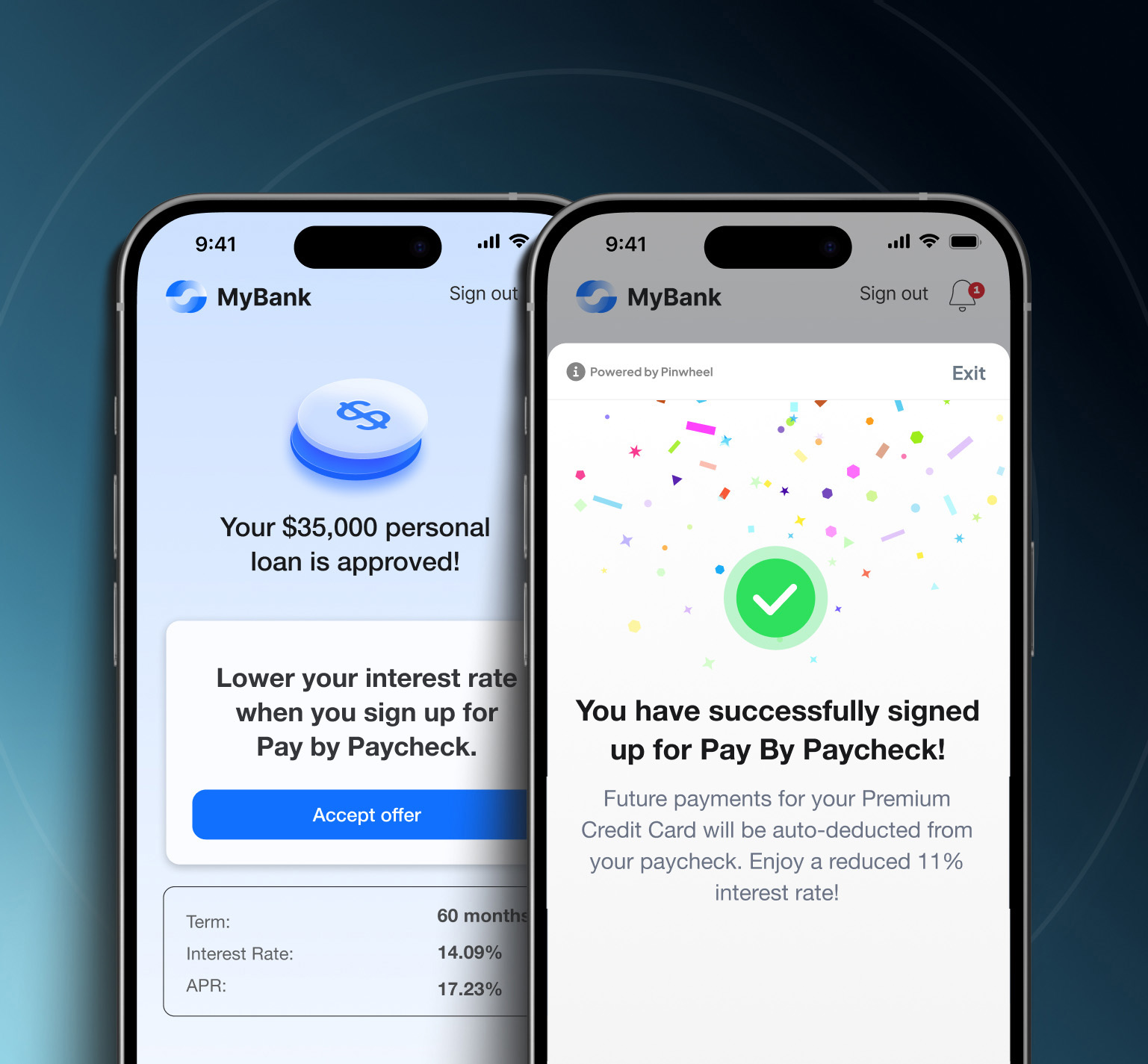
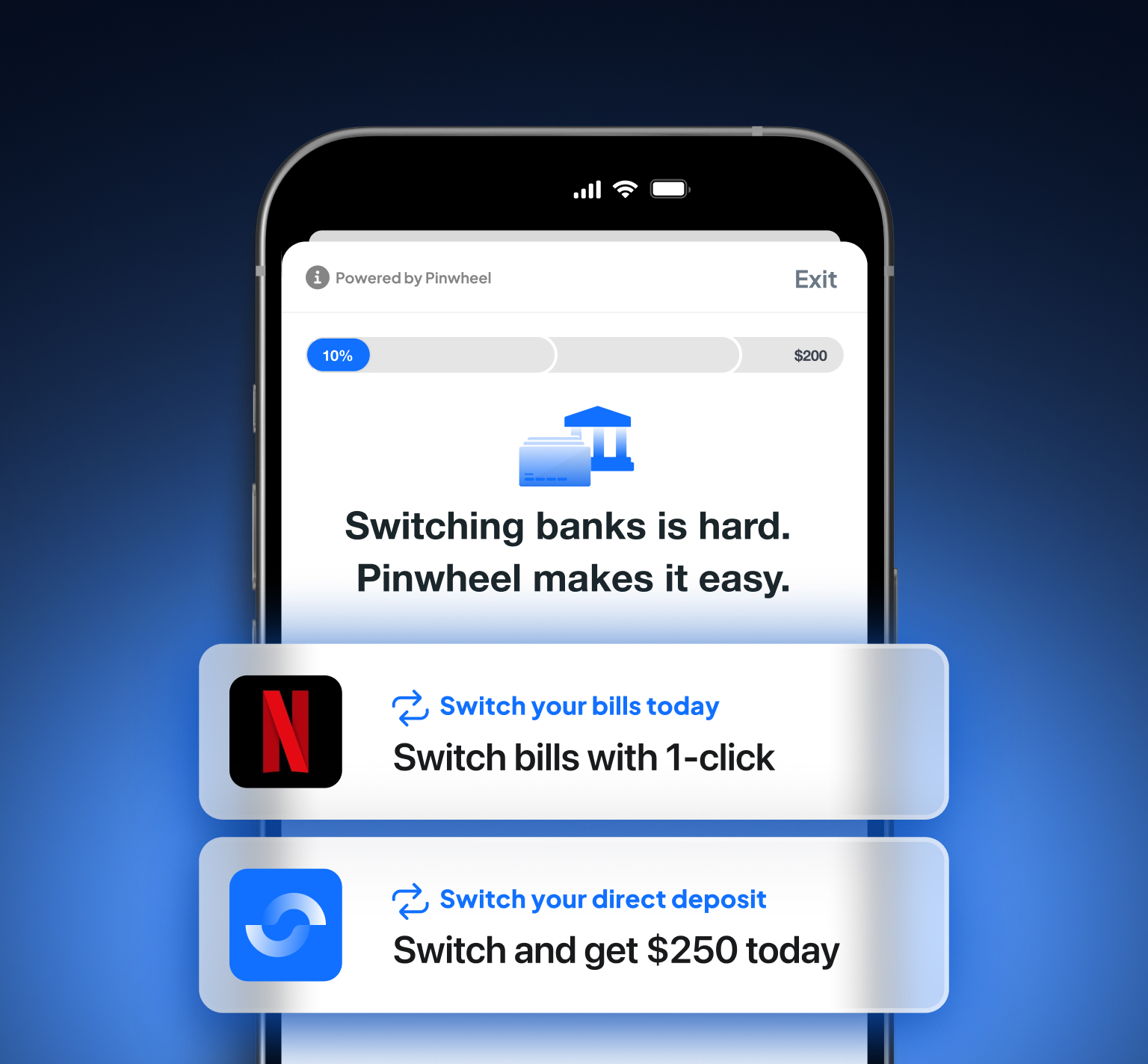
Pinwheel Deposit Switch lets users designate any portion of their paycheck to be deposited into a destination of their choosing. Depending on the specific use case, a user can establish direct deposit allocations to direct:
- A fixed dollar amount
- A percentage of each paycheck
- Their full paycheck
Once the fiat arrives in the user’s destination account, the crypto platform can use its existing trading infrastructure to carry out the customer’s instructions. That might mean automatically purchasing Bitcoin or another cryptocurrency to take advantage of dollar/cost averaging, exchanging a portion of funds to stable coin to maintain a risk-managed balance ratio, or simply earning interest in the account while the user determines their next investment decision.
Pinwheel enables the automatic movement of the paycheck; the crypto platform remains responsible for any subsequent conversion or investment transaction. This distinction is important. Pinwheel is not a substitute for a fiat-to-crypto execution provider. It adds an upstream funding layer that can make the onramp more useful.
A conventional crypto onramp turns fiat into crypto. Pinwheel helps get fiat into the account automatically each payday. Together, they create a more complete path from income to digital assets.
This model is particularly relevant to crypto exchanges, Bitcoin savings platforms, brokerages, and fintechs that give customers a fiat balance or an account and routing number through a banking partner.
Why paycheck funding changes the customer relationship
American consumers consistently describe their primary financial account as “the one where I receive my direct deposit.” Connecting direct deposit ensures your financial institution maintains “top of wallet” position, and continues to be the user’s first stop for crypto trading needs. Once the user has established their allocation, funding happens automatically every pay-cycle, radically shortening the time to investment horizon. That can help a crypto platform:
Increase account balances
A fixed amount or percentage of each paycheck arriving according to the customer’s pay cycle reduces dependence on sporadic, manually initiated deposits.
Enable automated investment instructions
The platform can pair paycheck funding with recurring trade instructions, enabling customers to take advantage of dollar/cost averaging and achieve better investment outcomes.
Secure the primary financial relationship
A platform that receives part of the customer’s paycheck is stickier and closer to the center of a user’s financial life. Users enabling direct deposit are proven to have higher average balances, greater feature attach rates, and higher lifetime value.
The strategic value is not simply another deposit method. It is the ability to make the crypto account part of the customer’s financial life.
River: A paycheck-powered path to Bitcoin
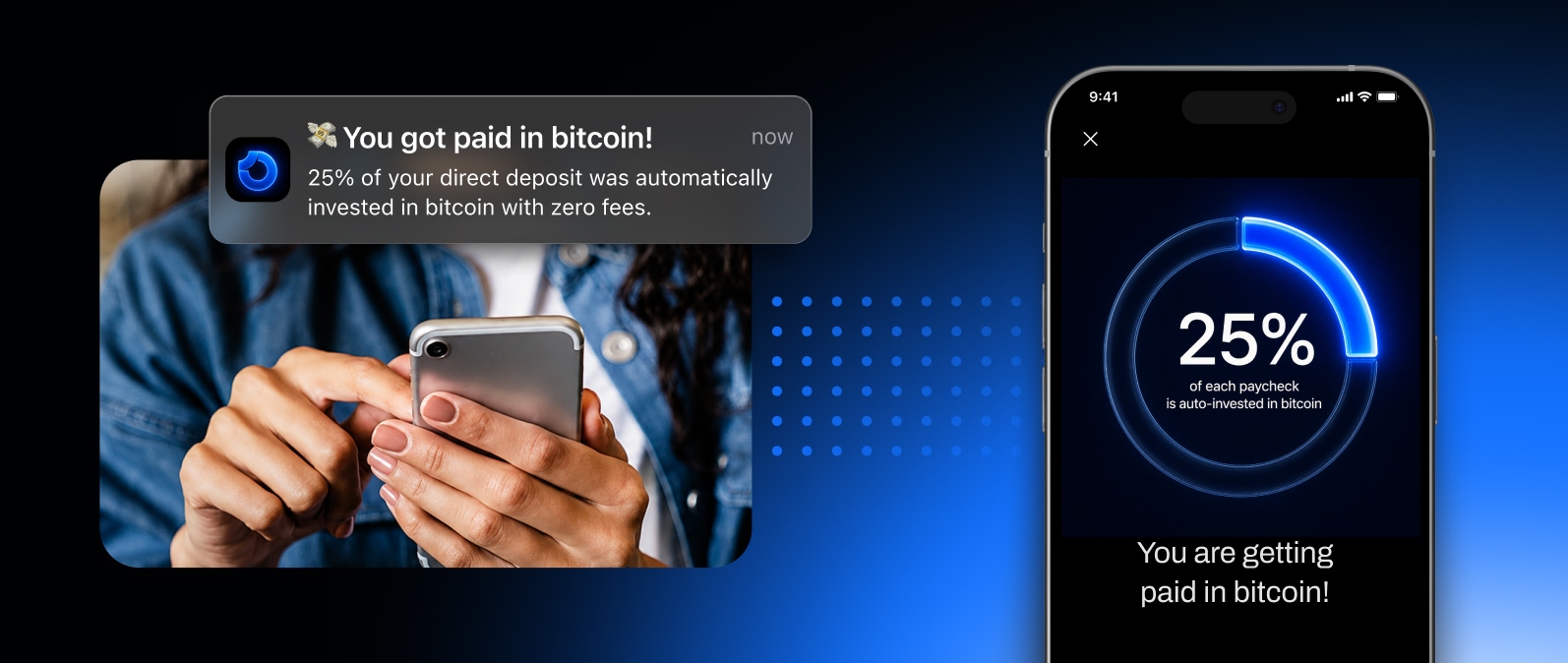
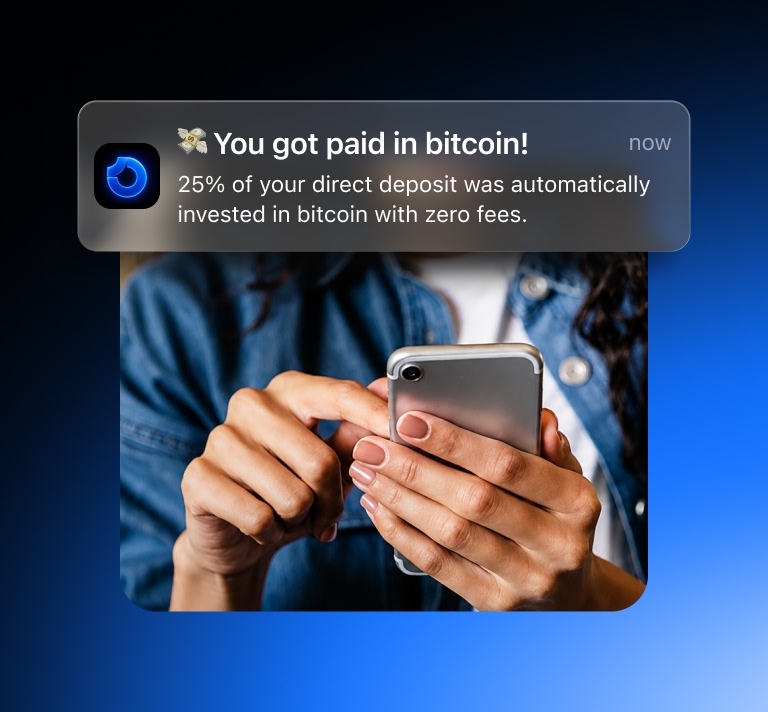
Pinwheel customer River has pioneered how payroll connectivity can enable a crypto-first bank account. Without leaving the River app, River users can connect to their payroll provider and authorize any portion of their paycheck to be automatically deposited to their River account. Customers choose what portion of each paycheck they want to convert automatically to Bitcoin, while the remaining amount can stay in cash.
The experience connects three important steps:
- Income arrives automatically
- The customer controls the investment allocation
- River executes the customer’s trading instructions, decoupling trade timing from account funding dependencies
River’s innovative account experience proves a crypto-first bank account is possible. A direct deposit-enabled experience is a more durable model, helping users make smarter investment decisions while increasing loyalty and profitability for the crypto institution.
Read more about the Pinwheel x River partnership here.
Is Pinwheel a crypto onramp API?
Pinwheel is not a conventional fiat-to-crypto conversion API. It does not execute the crypto purchase or deliver assets to a wallet.
Instead, Pinwheel powers two critical parts of the broader onramp journey:
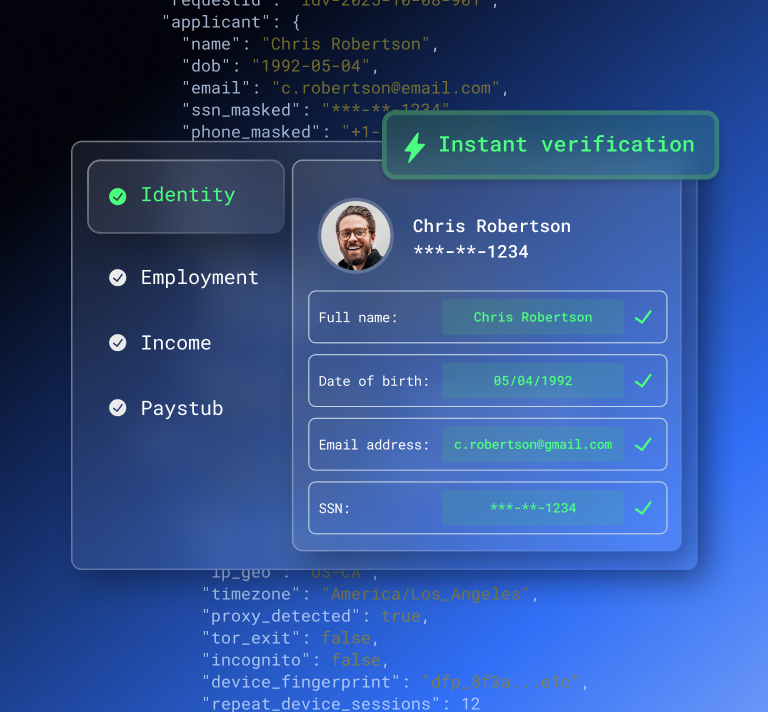
- Verification: Payroll-sourced identity, income, and employment data can strengthen onboarding and fraud controls.
- Funding: Direct deposit switching can establish an automated, recurring flow of fiat into the customer’s account.
For crypto platforms with a fiat account layer, Pinwheel can therefore serve as the infrastructure connecting the customer’s paycheck to the platform’s existing crypto onramp.